
Scalp Micropigmentation in Orlando: Is SMP Right for You?
he look of fuller hair, without surgery
Some people want their hair back. Others simply want to stop thinking about it. They want a crisp hairline, a scalp that doesn’t shine through under the bathroom light, and a look that holds up on a humid Orlando afternoon.
For many of them, the answer is scalp micropigmentation (SMP). It is one of the fastest-growing non-surgical options in hair restoration, and it is one of the services we offer at HCI Hair Solutions. In this guide, we explain what SMP is, who it suits best, what the sessions are like and how to protect your results in the Florida sun.
What is scalp micropigmentation?
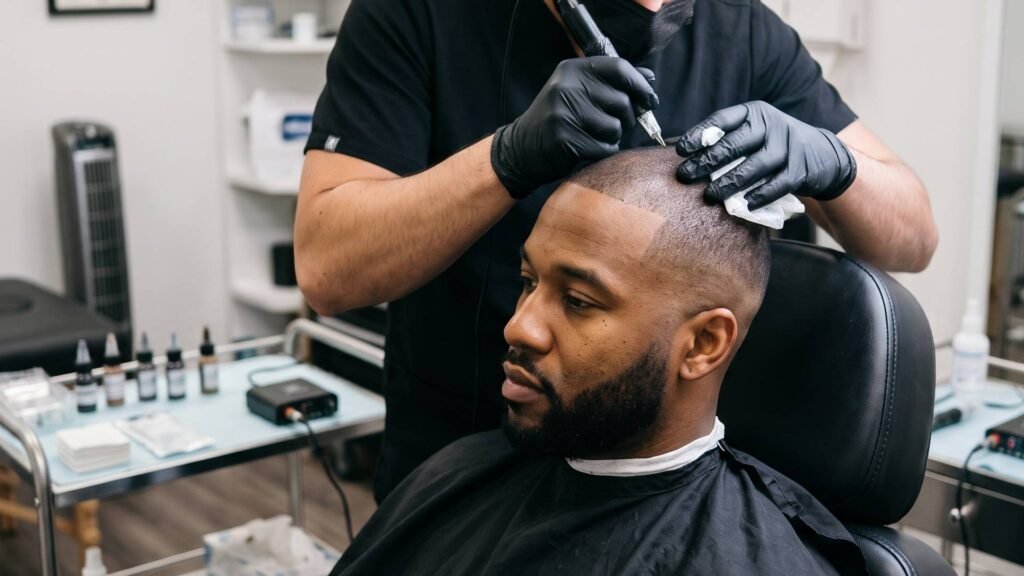
Scalp micropigmentation is a cosmetic treatment that places tiny deposits of pigment into the upper layers of the scalp. Each deposit is shaped and spaced to look like a natural hair follicle. Layered together, they create the appearance of density.
SMP does not grow hair. Instead, it changes how the scalp looks. Depending on your goals, it can:
- Recreate a soft, natural hairline
- Give a full “buzz cut” look across a shaved head
- Add shadow between existing hairs so thinning areas look denser
- Camouflage scars, including scars from past hair transplant surgery
- Blend patchy areas caused by some types of alopecia
The technique is often compared to a tattoo, but it is different in important ways. The needles are finer, the pigment sits more superficially and the deposits are far smaller. The goal is not a solid shape. It is thousands of individual points that read as hair.
Who is a good candidate for SMP?
SMP works for a wider range of people than most expect. Here are the situations where we see it make the biggest difference.
Men with advanced hair loss who like a short, clean look. If you already keep your head shaved or very short, SMP can turn a bald scalp into what looks like a fresh buzz cut, with a defined hairline framed to your face shape.
Men and women with diffuse thinning. When hair is still present but the scalp shows through, pigment placed between existing hairs reduces contrast. Your hair looks thicker, even though it is the same length and style.
Women with a widening part or thinning crown. SMP for women is usually subtle. It focuses on the part line and crown rather than the hairline, so longer hair can stay exactly as it is.
Anyone with scars. Linear scars from strip (FUT) surgery, small dotted scars from FUE, and scars from injury can be blended so they are far less noticeable.
People with alopecia. SMP can soften the appearance of patchy loss. Because some forms of alopecia are active and changing, we look closely at your history before recommending it.
SMP may not be the best first step if your hair loss is changing quickly, if you have an active scalp condition or if you want long hair you can style and move. In those cases, options such as Alma TED, laser hair therapy or a custom hair system may be a better fit, and we will tell you so at your consultation.
What the SMP process looks like
SMP is built in layers over several visits. Each session adds density and refines the result, which is why one visit is rarely enough for full coverage.
- Consultation and design. We look at your hair loss pattern, skin tone and the style you want. For a hairline, we map the shape to your face so it looks age-appropriate, not artificially sharp.
- Pigment matching. The shade is chosen for your skin tone and hair color. Going slightly softer at first is normal, because darker pigment can always be added later.
- First session. Pigment is placed in a light, even pattern. Most clients describe the feeling as mild and very tolerable.
- Follow-up sessions. Later sessions build density, fill gaps and adjust the tone as your skin heals.
- Touch-ups over time. Like any pigment in the skin, SMP softens with time and sun exposure. Occasional touch-ups keep the look crisp.
At HCI Orlando, SMP is offered as a single session for small areas and touch-ups, or as a three-session package for complete scalp coverage. See current pricing on our Scalp Micropigmentation page.
Aftercare in the Florida sun
Living in Central Florida makes aftercare especially important. Sun, sweat, pools and humidity all affect how well pigment settles and how long it lasts.
Your specialist will give you exact instructions, but these are the general principles:
- Keep the scalp dry and clean at first. Avoid washing, heavy sweating and swimming in the first days after each session so the pigment can settle.
- Skip the gym, sauna and pool for a while. Chlorine, salt water and heavy sweat can pull pigment out before the skin has healed.
- Protect your scalp from direct sun. Wear a loose hat outdoors during healing. Long term, a daily SPF on the scalp is the best way to slow fading in the Florida sun.
- Don’t pick or scratch. Light flaking is normal. Let it fall away on its own.
- Keep the follow-up appointments. They are part of the result, not an extra.
With good care, SMP can keep its look for years, with touch-ups along the way.
SMP works well alongside other treatments
SMP doesn’t have to be a standalone choice. Because it changes how the scalp looks rather than how hair grows, it pairs naturally with other non-surgical options.
- SMP + Alma TED or laser therapy. Treatments that support your existing hair handle growth, while SMP adds visual density right away.
- SMP + a hair system. Pigment along the hairline or sides can help a custom hair system blend even more naturally.
- SMP after a transplant. SMP can fill in density between grafts and soften visible donor scars.
The right combination depends on your hair, your routine and how you like to wear your style. That’s exactly what a consultation is for.
Frequently asked questions
Does scalp micropigmentation hurt? Most clients describe it as mild discomfort. Sensitivity varies by person and by area of the scalp.
Will SMP look fake? A well-done treatment shouldn’t. Natural results come from the right pigment shade, varied dot sizes and a hairline designed for your age and face shape.
Can women get SMP? Yes. For women, SMP usually focuses on the part line and crown, adding shadow beneath longer hair rather than recreating a shaved look.
Can I still go to the beach? Yes, once you have healed. Protect your scalp with a hat or SPF to slow fading.
Is SMP permanent? The pigment is long-lasting, but it gradually softens. Most people plan for occasional touch-ups to keep the look sharp.
Book your free SMP consultation in Orlando
If you’re tired of hiding thinning areas or scars, SMP may be the simple, low-maintenance change you’ve been looking for. Our team has more than 20 years of experience in hair restoration and will help you decide whether SMP, another treatment or a combination is right for you.
Book your free consultation or call us at 407-830-0554.